
Did you know that hackers can mimic your online store’s payment page and steal your revenue without customers realizing they’re using a fake form?
Or were you aware that one of the easiest ways to attack a website is by exploiting a vulnerability in a WordPress plugin?
We spoke with ethical hackers from the Patchstack security community to understand how hackers choose their targets, what the hacking process looks like, and what the consequences are. They shared real cases they’ve worked on to help you answer a crucial question:
How do you protect your websites?
Let’s dive in!
Hackers don’t choose their targets manually — instead, they launch automated attacks at scale against as many websites as possible.
They are not specifically targeting you. They are looking for websites with vulnerabilities. If your site happens to be one of them, it
„The easiest way is to mass-scan websites to detect whether they are using a component or plugin with a known vulnerability. Then the attackers check whether the victims have any valuable data or resources.
If not (and if the vulnerability allows remote code execution), the hackers can install an HTTP relay and sell access to the site as part of a proxy farm. Remote Code Execution (RCE) also enables an attacker to reach other sites hosted on the same server, if they are not properly isolated from one another.”
“In several e-commerce cases, the hacker added a script to the checkout page that sent them the credit card details.
In another case, they simply replaced the checkout page with their own version, tricking customers. Since purchases were confirmed with one-time password authorization, they were guaranteed to receive the money — banks didn’t refund anything.”
The consequences for an e-commerce site are quite clear. You lose:
And your customers may lose money and sensitive financial information.
I once had three smaller websites. I never thought they would get hacked because I wasn’t hosting anything valuable on them. I assumed I was safe, but in reality, even small sites are targets for hackers.
True, they can’t always profit directly from them the way they can with online stores. However, hacking still has other consequences:
The answer is simple:
"Once hackers discover a vulnerability, exploiting a website can take just a few minutes."
Two factors influence the exact timing:
In many cases, the most dangerous attacks are caused by simple logic flaws — including those commonly found in WordPress plugin vulnerabilities:
"For example, in WordPress, a simple logic flaw in a plugin that allows users to register and assign roles to themselves can lead to a profitable attack. Another example — harder to detect — is an insecure password reset process or social login flow."
These flaws are difficult to detect because the vulnerability exploits the validation key check that is supposed to ensure the legitimacy of the action.
In other words, the application/website cannot even “understand” that the action is not legitimate.
“Unauthenticated vulnerabilities are the most likely to be exploited because most attackers are opportunists looking for easily accessible targets.”
When our interviewee talks about “unauthenticated vulnerabilities”, this means that exploiting certain vulnerabilities does not require access to a WordPress account.
There are also vulnerabilities that allow attackers to “upgrade” their low-privileged account (e.g., a WordPress contributor) to an administrator level, giving them full control over the website.
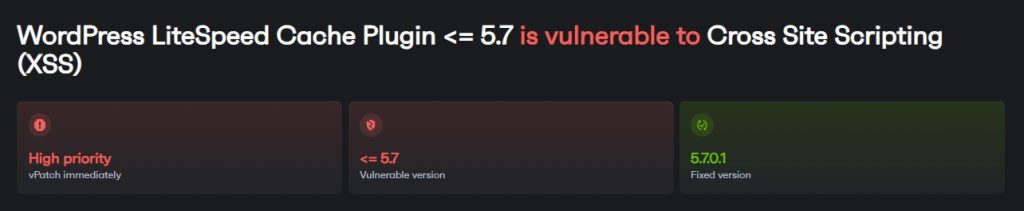
An example of an unauthenticated vulnerability exploitation first discovered by Patchstack. Source: Patchstack
“Typically, we most often see the following: unauthenticated or low-privilege escalation (either with no account or from a low-level account to an administrator account), unauthorized or low-privilege Remote Code Execution (RCE — an immediate takeover of the web server without restrictions), and SQL injections.”

An example of exploiting an SQL Injection vulnerability discovered and patched by Patchstack. Source: Patchstack
SQL Injection allows attackers to insert or “inject” malicious SQL code into a database query, which can give them access to the database.
From there, they can extract data, modify it, or take the entire website offline.
“SQL Injection is well-suited for dumping the database and stealing customer data or accounts. If the website does not use proper data encryption, SQL Injection can even give attackers access to passwords or payment information.”

An example of exploiting an SQL Injection vulnerability discovered and patched by Patchstack. Source: Patchstack
Cross-Site Scripting (XSS) vulnerabilities are commonly found on websites and web applications. Attackers inject malicious scripts into web pages viewed by other users.
These scripts can then execute in the user's browser, allowing attackers to:
“In my opinion, XSS attacks are less likely to be used in large-scale ‘spray-and-pray’ campaigns. Instead, they are very effective when targeting a specific domain — especially if the phishing is done subtly and without mistakes.”
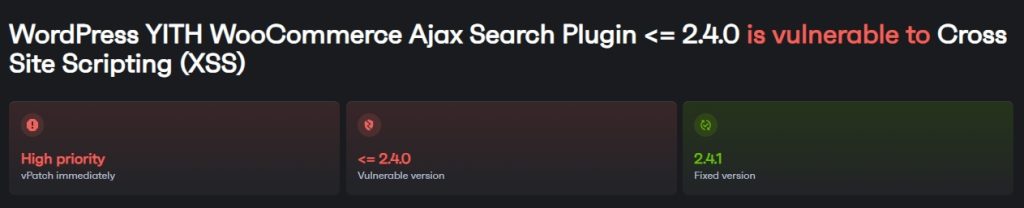
An example of exploiting an XSS vulnerability. Source: Patchstack
Hacks are not always obvious. If something feels suspicious or you’ve received warning alerts, it’s worth looking for Indicators of Compromise (IOC):
“Check the server logs for malicious requests, suspicious new user accounts with elevated privileges that you did not create yourself, and randomly uploaded images from users that fail to load properly.”
Other symptoms that may indicate a hack include:
In such cases, it is recommended to run a server-side malware scan or file integrity scan to detect patterns of malicious activity or modified files.
Nestor Angulo de Ugarte, head of Patchstack’s database team, explains:
“File integrity monitoring is very useful in a WordPress environment because the core WordPress files are fixed and should not change.
The ‘wp-admin’ and ‘wp-includes’ folders, as well as all core files in the site’s root directory—except for ‘wp-config.php’—should not be modified unless the site is being updated. If any changes occur there, it’s a clear sign that something suspicious is happening.”
The exploitation of plugins, websites, and human error? Yes — sometimes it can feel like hackers are all-knowing beings capable of attacking us no matter what we do. But remember what our interviewee said earlier?
Hackers are opportunists.
And just like burglars, they can be discouraged with the right preventive measures:
“First, apply the Principle of Least Privilege (PoLP) and give users only the access they actually need.
Second, always keep an eye on your website’s core software and third-party components. For example, in WordPress, regularly check for updates to the WordPress core version, plugins, and themes.”
You don’t have to remain vulnerable during the window between a vulnerability being discovered and the release of an official patch.
Instead, use Patchstack.
Patchstack is designed specifically to block vulnerability-based threats and prevent malicious code from exploiting logic flaws on your website.
When the security community discovers a vulnerability, Patchstack creates a protective barrier between your website and attackers attempting to exploit it.
With virtual patching, you get real-time protection against attacks.
"File integrity monitoring is extremely useful in a WordPress environment because the core WordPress files are fixed and should not change.
The ‘wp-admin’ and ‘wp-includes’ folders, as well as all core files in the site’s root directory — except for ‘wp-config.php’ — should remain unchanged unless you are updating the site. If anything does change there, it’s a clear sign that something suspicious is happening.”
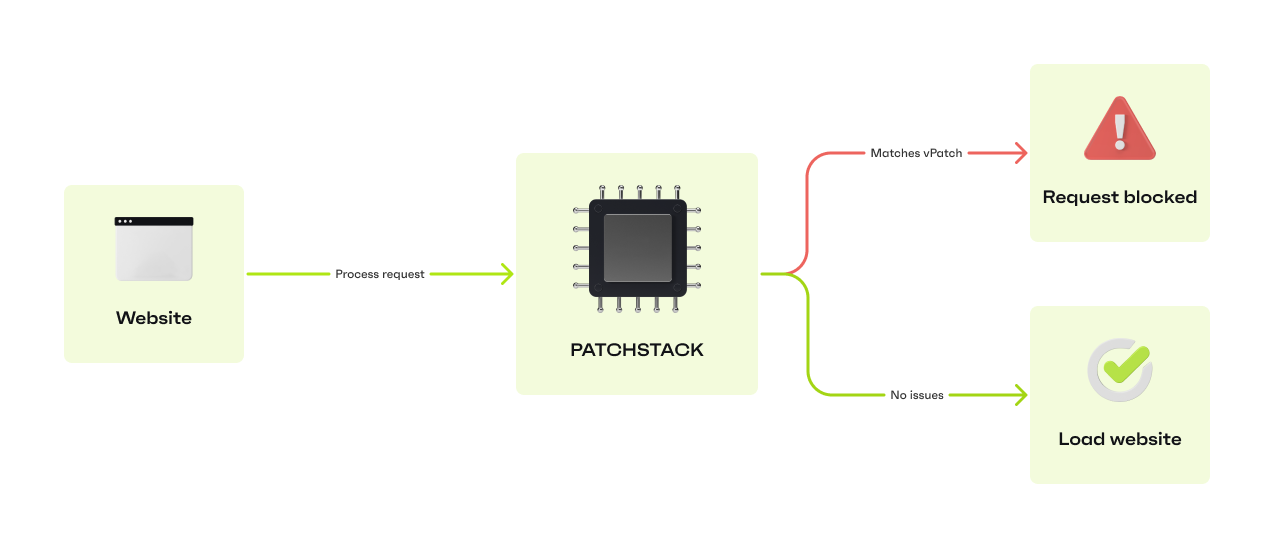
Source: Patchstack
This allows you to safely update the vulnerable component while avoiding:
Finally, we couldn’t end without asking our ethical hackers about their view of the future. As in most industries, artificial intelligence (AI) is at the center of change in cybersecurity:
“In cybersecurity, AI will surpass every human’s capabilities in the coming years.
With nearly unlimited resources and speed, AI will soon be able to discover even the most complex and well-hidden vulnerabilities in software.
And because AI will constantly analyze and scan thousands of plugins at the level of top cybersecurity experts, we will see many more cases of vulnerabilities being exploited in the future.”
You are not defenseless — and neither is the WordPress community
Thanks to programs for vulnerability researchers, such as Patchstack Alliance, and managed vulnerability disclosure programs for plugins, we have effective tools to protect the community, revenue, and the future.
Additionally, growing cybersecurity awareness — supported by regulations like the Cyber Resilience Act — is helping strengthen web security.
Now that we understand the threat, it’s time to reduce its impact and protect our websites better.
Lana Rafaela
Source: Patchstack
The security of WordPress websites is essential for preventing hacks and data theft. Regular maintenance and updates are key to keeping your site protected and running smoothly.
We offer a professional website maintenance service that ensures your site remains up-to-date and secure at all times. Our service includes monthly software updates, security audits, regular backups, and 24/7 monitoring to detect and prevent potential issues.
By entrusting your website’s maintenance to us, you can be confident that your site is protected and performing optimally. Start your free trial today and experience the benefits of our service.

Amsel OÜ
Reg. No. 12705326
VAT No. EE102601585